
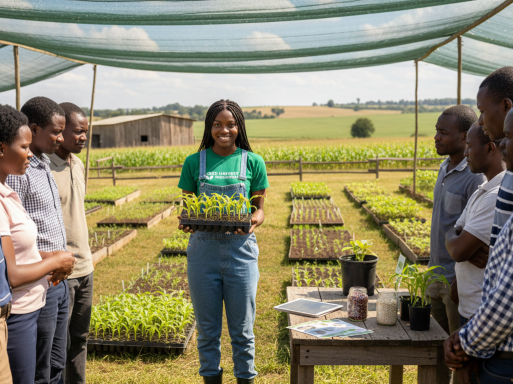


At CornGro, we often say our seeds are born from conversations—not just in research labs, but in the fields where they’ll grow. This collaborative approach to plant breeding represents a fundamental shift from traditional methods, and it’s revolutionizing how we develop varieties that truly meet farmers’ needs.
Beyond the Research Station Walls
Traditional breeding often happens in isolation: scientists develop varieties in controlled research stations, then release them to farmers. At CornGro, we flip this model. Our breeding programs begin with listening. Before we cross our first plants, our team spends weeks in farming communities—from the highlands of Central Kenya to the drier lowlands of Eastern regions—documenting local challenges, preferences, and traditional knowledge.
The “Farmer-First” Breeding Cycle
Our collaborative process follows four key stages:
- Participatory Variety Selection: Early-generation breeding materials are planted in farmers’ fields. Farmers themselves evaluate and score plants for traits that matter to them—not just yield, but also cooking quality, stalk strength for fodder, or grain color for market preference.
- On-Farm Mother Trials: Promising lines are tested under actual farming conditions with local management practices. This reveals how varieties perform with real-world constraints, not just optimal research station care.
- Feedback Integration: Farmers’ observations directly inform our next breeding crosses. If multiple farmers note that a certain line is particularly drought-resilient or resistant to local pests, those traits become priorities.
- Co-creation of Agronomy: The best seed needs the best practices. We work with farmers to develop locally adapted planting guides that combine scientific recommendations with practical, resource-appropriate methods.